Photo: Dэя-Бøяg, Wikipedia
Sedum
Corsican Stonecrop
Sedum dasyphyllum
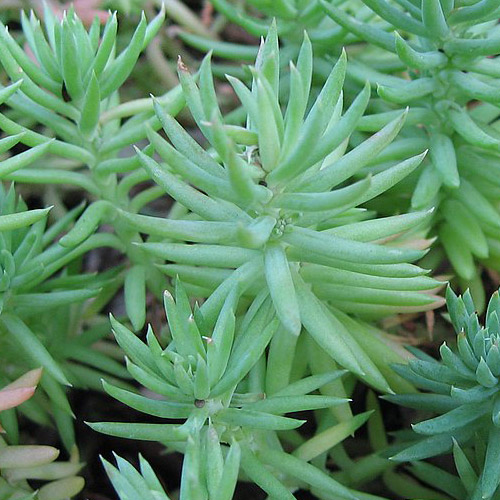
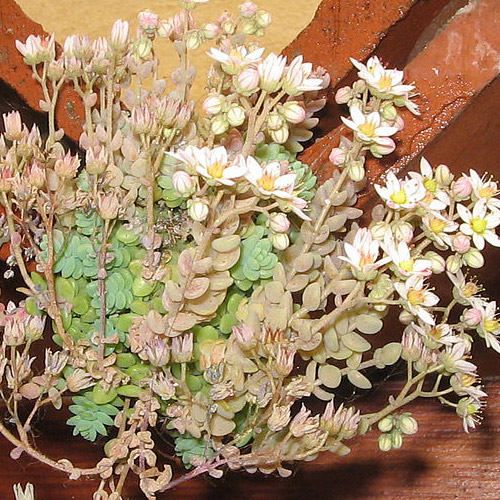
A low mat-forming stonecrop with tiny blue-green leaves that can develop pink and purple tones.
Plant profile updated August 25, 2026
QUICK FACTS
Key growing and identification information for Sedum dasyphyllum.
IDENTIFICATION
Look for these characteristics when identifying Sedum dasyphyllum.
HOW TO GROW CORSICAN STONECROP
Use these growing guidelines as a practical starting point and adjust for local conditions.
Light
Provide full sun for compact growth, with afternoon shade in very hot climates.
Water
Water after the soil dries and avoid keeping the dense mat continually damp.
Soil
Use gritty fast-draining soil in beds, rock gardens or containers.
Temperature and Maintenance
Keep winter soil relatively dry and trim wandering stems when needed.
PROPAGATION BY STEM CUTTINGS
Corsican Stonecrop roots readily from short stem sections.
- Select healthy plant material.
- Use a sterile blade and allow cut surfaces to callus.
- Place the cutting or plantlet in dry, fast-draining soil.
- Wait several days before watering lightly.
- Keep it warm and in bright filtered light while roots establish.
SCIENTIFIC CLASSIFICATION
The botanical classification currently used for this plant profile.
| Kingdom | Plantae |
|---|---|
| Clade | Tracheophytes |
| Clade | Angiosperms |
| Order | Saxifragales |
| Family | Crassulaceae |
| Genus | Sedum |
| Species | Sedum dasyphyllum |
Safety: Generally considered non-toxic. Avoid ingesting unfamiliar plants and keep potentially toxic species away from children and animals.