
Quick Facts
LightFull sun to partial shade
WaterTypical succulent needs
Maximum Height12 inches / 30.5 cm
Maximum Width24 inches / 61 cm
HardinessUSDA Zone 10a
Minimum Temperature30°F / -1.1°C
PropagationLeaves and stem cuttings
ToxicityCan be toxic to animals
DormancySummer dormant
Growth HabitSmall shrub
Identification
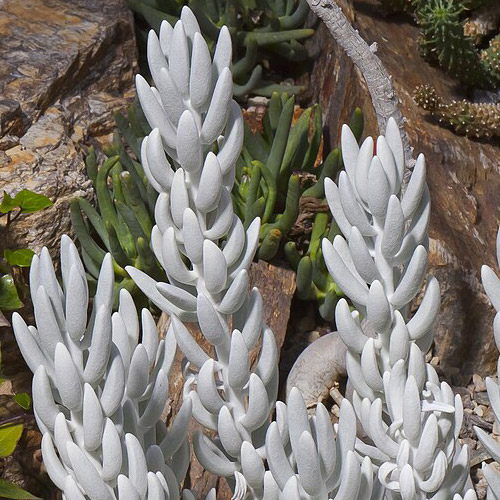
LeavesCylindrical white leaves resemble small cocoons.
SurfaceDense white hairs protect the leaf surface.
StemsLeaves grow along branching woody stems.
GrowthMature plants form compact silvery shrubs.
How to Grow Cocoon Plant
Light
Provide full sun to partial shade and at least six hours of bright light.
Water
Soak the soil thoroughly, then let it dry completely.
Soil
Use a gritty fast-draining succulent mix.
Temperature
Move containers indoors before temperatures reach 30°F (-1.1°C).
Indoor Growing
Place near a bright south-facing window in the Northern Hemisphere.
Handling
Avoid rubbing the white leaf covering.
Propagation
Leaves
- Twist off a healthy leaf cleanly.
- Let it callous for one to two days.
- Place on well-draining soil.
Stem Cuttings
- Cut a healthy stem with a sterile tool.
- Let it callous for several days.
- Plant in dry succulent soil.
Scientific Classification
| Kingdom | Plantae |
|---|---|
| Order | Asterales |
| Family | Asteraceae |
| Genus | Caputia |
| Species | Caputia tomentosa |
Note: Cocoon Plant can be toxic to animals if ingested. Keep it away from pets.
Sources and Image Attribution
Plant details are compiled from the existing Xerophyte.Garden profile.
Primary image: Diego Delso, Wikimedia Commons.

