
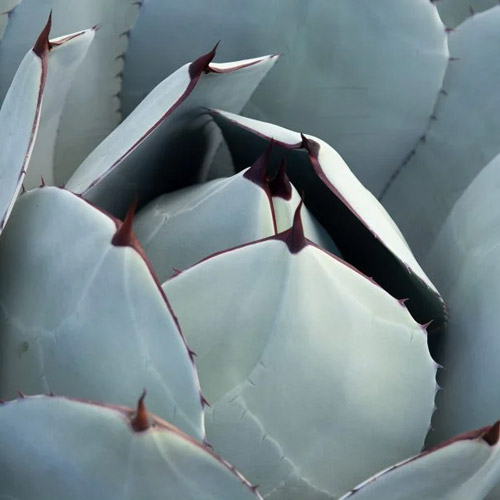
Photo: Cassidy Tuttle, succulentsandsunshine.com
Agave parryi truncata
Agave parryi var. truncata
Known as Artichoke Agave, this slow-growing succulent forms a broad rosette of blue-gray leaves with sharp marginal spines and dark terminal points.
Plant profile updated August 11, 2026
Quick Facts
Key growing information for Artichoke Agave.
Identification
Characteristics that help identify Artichoke Agave.
How to Grow Artichoke Agave
Adjust these guidelines for local conditions.
Light
Provide full sun and at least six hours of direct sunlight daily.
Water
Water thoroughly, then allow the soil to dry completely before watering again.
Soil
Use fast-draining succulent soil and a container with an open drainage hole.
Temperature
Protect the plant when temperatures approach 10°F (-12.2°C).
Propagation by Offsets
- Remove a healthy offset using a sterile, sharp tool.
- Allow the cut surface to callous for several days.
- Plant the offset in well-draining succulent soil.
- Water only after the soil has dried completely.
Scientific Classification
| Kingdom | Plantae |
|---|---|
| Order | Asparagales |
| Family | Asparagaceae |
| Subfamily | Agavoideae |
| Genus | Agave |
| Species | Agave parryi |
| Variety | truncata |
Safety: The sap can be toxic and the leaf spines can cause injury. Wear gloves and eye protection when handling or propagating this plant.

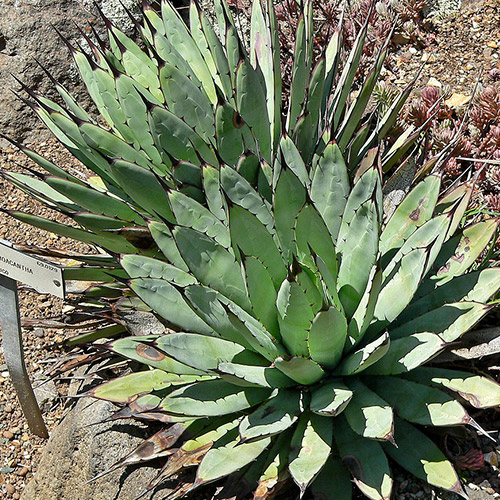
Sources and Image Attribution
Plant details are compiled from the existing Xerophyte.Garden profile.
Primary image by Cassidy Tuttle, Succulents and Sunshine.

