
Quick Facts
LightFull sun to partial shade
WaterSlightly below typical needs
Maximum Height12 inches / 30 cm
Maximum Width12 inches / 30 cm
HardinessUSDA Zone 9a
Minimum Temperature20°F / -6.7°C
PropagationOffsets and seeds
ToxicityToxic to people and animals
DormancySummer dormant
Flower ColorOrange-red
Stress ColorRed and yellow
WildlifeBirds and butterflies
Identification
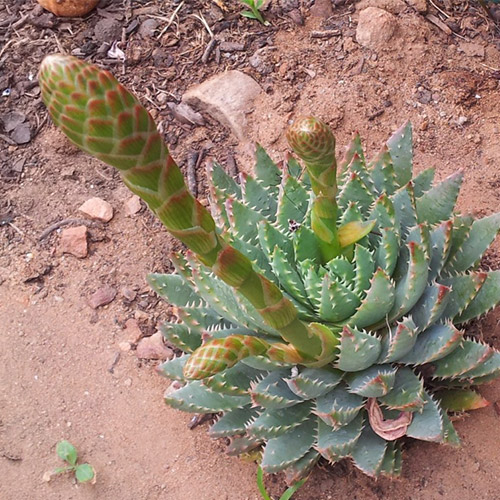
LeavesShort, thick leaves form compact rosettes.
TeethWhite teeth line the leaf margins.
Stress ColorDirect sun can produce red and yellow tones.
FlowersOrange-red flowers can appear in late spring.
How to Grow Short-Leaved Aloe
Light
Provide full sun to partial shade.
Water
Water slightly less often than a typical succulent.
Soil
Use fast-draining soil for containers or rock gardens.
Temperature
Protect the plant near 20°F (-6.7°C).
Propagation
Offsets
- Separate a healthy offset from the base.
- Let it dry for one to two days.
- Replant it in well-draining soil.
Seeds
- Sow seeds in well-draining soil during fall.
- Start them indoors under a grow light in cooler regions.
Leaf propagation is not recommended because detached leaves tend to rot.
Scientific Classification
| Kingdom | Plantae |
|---|---|
| Order | Asparagales |
| Family | Asphodelaceae |
| Subfamily | Asphodeloideae |
| Genus | Aloe |
| Species | Aloe brevifolia |
Safety: Short-Leaved Aloe can be toxic to people and animals. Prevent ingestion and keep damaged leaves or sap away from skin and eyes.
Sources and Image Attribution
Plant details are compiled from the existing Xerophyte.Garden profile.
Primary image by Abu Shawka via Wikipedia.

