
Quick Facts
LightFull sun to partial shade
WaterTypical succulent needs
Maximum Height24 inches / 60 cm
Maximum Width36 inches / 91 cm
HardinessUSDA Zone 9a
Minimum Temperature20°F / -6.7°C
PropagationOffsets and seeds
SafetySpines can irritate
DormancySummer dormant
Flower ColorOrange
Stress ColorRed
WildlifeBees and hummingbirds
Identification
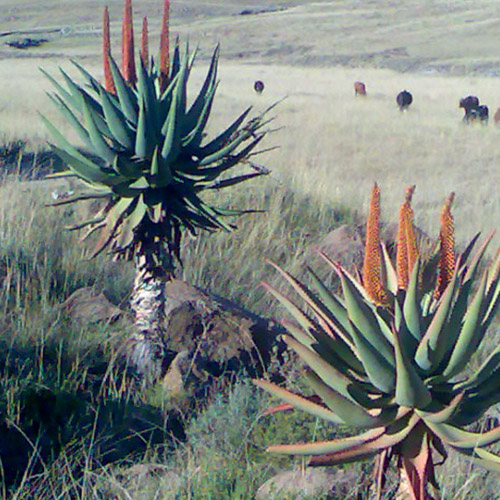
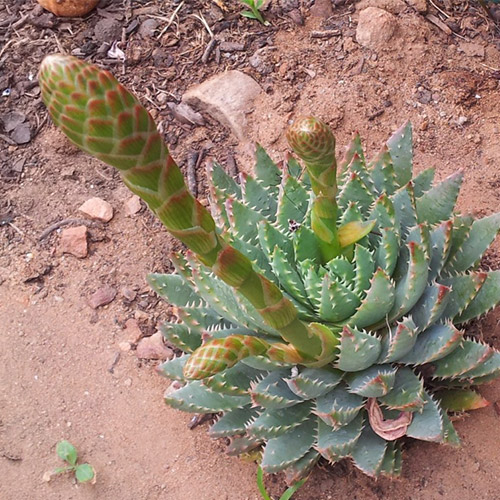
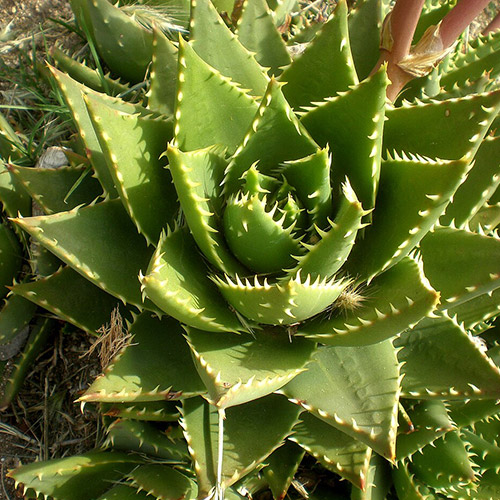
LeavesLong green leaves curl upright.
TeethFirm teeth line the leaf edges.
Stress ColorLeaves can turn red in strong summer sun.
FlowersTall orange flower spikes can appear in fall.
How to Grow Cape Aloe
Light
Provide full sun to partial shade.
Water
Use the soak-and-dry method.
Soil
Use fast-draining soil and good airflow.
Temperature
Protect the plant near 20°F (-6.7°C).
Propagation
Offsets
- Remove a healthy offset with a sterile tool.
- Allow it to callous for several days.
- Plant it in well-draining soil.
Seeds
- Sow seeds in well-draining soil.
- Start them indoors in cooler climates.
Scientific Classification
| Kingdom | Plantae |
|---|---|
| Order | Asparagales |
| Family | Asphodelaceae |
| Subfamily | Asphodeloideae |
| Genus | Aloe |
| Species | Aloe ferox |
Safety: Cape Aloe has firm teeth and spines that can irritate people and animals. Young leaves can also break easily.
Sources and Image Attribution
Plant details are compiled from the existing Xerophyte.Garden profile.
Primary image by Gregorydavid via Wikipedia.

