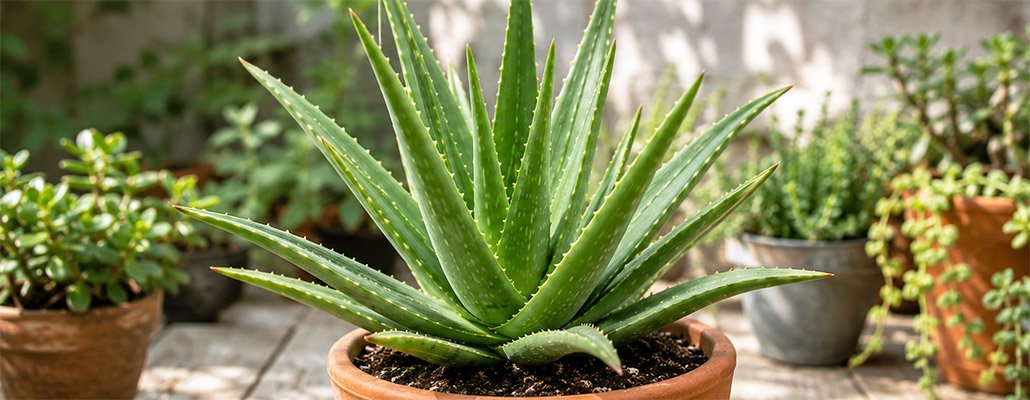
Healthy Aloe vera plant growing in a terracotta pot with thick green leaves.

Aloe vera Plant Care Guide

Aloe vera is one of the world’s most recognizable succulents. Its thick, water-storing leaves, compact rosette growth and tolerance for dry conditions make it suitable for sunny indoor spaces, patio containers and warm-climate xeriscapes.

Although best known for the clear gel inside its leaves, Aloe vera is also an attractive architectural plant. It requires relatively little maintenance when provided with strong light, fast-draining soil and enough time to dry between waterings.

Aloe vera care at a glance: Give the plant bright light, use a container with drainage holes and water only after the soil has dried completely.

Mature Aloe vera plant growing in a terracotta container
A mature Aloe vera plant forms a rosette of thick, upright leaves.


Aloe vera Quick Facts


Scientific nameAloe vera
Common namesAloe vera, medicinal aloe and burn plant
FamilyAsphodelaceae
Plant typePerennial succulent
Native rangeArabian Peninsula
Typical mature sizeApproximately 1 to 2 feet tall and wide
Outdoor hardinessGenerally grown in USDA zones 9 through 11
LightBright light to full sun after gradual acclimation
Water needsLow
PropagationOffsets or seeds
Pet safetyKeep away from cats and dogs


How to Identify Aloe vera

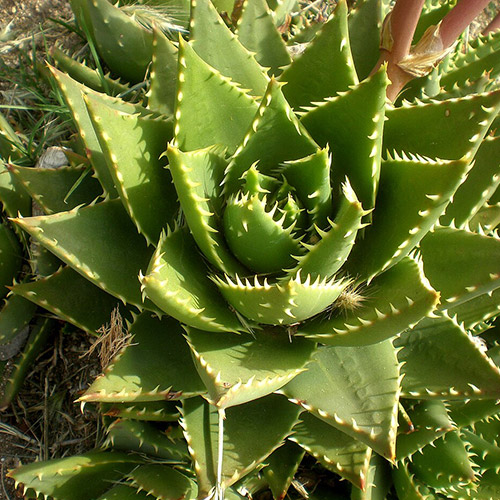
Aloe vera grows as a stemless or short-stemmed rosette. Its fleshy leaves are usually gray-green to medium green and taper toward pointed tips. Small teeth run along the leaf margins, while younger plants may display pale spots that become less noticeable with age.

A healthy mature plant commonly develops offsets around its base. These small plants, often called pups, can eventually form a dense cluster around the original rosette.

Close-up of Aloe vera leaf showing serrated margins and thick water-storing tissue
Small teeth along the leaf margins are a recognizable feature of Aloe vera.


Natural Habitat and Growth Habit

Aloe vera is adapted to warm, dry environments with rocky or sandy soils that drain quickly. Its leaves store moisture for use during dry periods, but this drought tolerance does not mean the plant should remain completely dry throughout its active growing season.

The plant performs best when it receives a thorough watering followed by enough time for its soil and roots to dry. Constantly moist conditions are far more dangerous than occasional dryness.

Learn more about the traits that allow these plants to conserve water in our guide to the different types of succulents.


Aloe vera Light Requirements

Aloe vera needs strong light to maintain compact, sturdy growth. A plant receiving insufficient light may become pale, weak or stretched.

Growing Aloe vera Indoors

  • Place it near a bright south-, east- or west-facing window.
  • Rotate the container periodically if the plant leans toward the window.
  • Use a grow light when natural indoor light is inadequate.
  • Keep leaves from pressing against extremely hot or cold window glass.

Growing Aloe vera Outdoors

  • Provide morning sun or gradually acclimate the plant to stronger direct sunlight.
  • Offer afternoon protection in climates with exceptionally intense summer heat.
  • Do not move an indoor-grown plant directly into all-day sun.
Prevent sunburn: Increase direct sunlight gradually over one to two weeks. Sudden exposure can leave permanent tan or brown patches on the leaves.


How Often to Water Aloe vera

Watering according to a fixed calendar is less reliable than checking the soil. Temperature, container material, plant size, humidity and seasonal growth all affect how quickly the pot dries.

  1. Check that the soil is dry well below the surface.
  2. Water deeply until moisture exits through the drainage holes.
  3. Empty any saucer beneath the container.
  4. Wait until the soil dries completely before watering again.

Indoor plants may require water approximately every two to four weeks, but this is only a general range. A plant in a warm terracotta pot may dry much faster than one in a large glazed container.

Signs Aloe vera May Need Water

  • Leaves appear thinner than usual.
  • Leaves begin to wrinkle or curl inward.
  • The pot feels noticeably lighter.
  • The soil is dry throughout the root zone.

Signs Aloe vera May Be Overwatered

  • Leaves feel soft, swollen or translucent.
  • The base of the plant becomes dark or mushy.
  • The soil remains wet for an extended period.
  • The plant develops a foul smell or collapses near the soil line.
Comparison of healthy firm Aloe vera leaves and soft overwatered Aloe vera leaves
Healthy leaves should feel firm. Soft or translucent tissue can indicate excess moisture or root damage.


Best Soil for Aloe vera

The best soil is a loose, mineral-rich mixture that allows water and air to move through the root zone quickly. A commercial cactus or succulent mix can work, although many packaged mixes benefit from additional pumice, perlite or another coarse mineral amendment.

Avoid dense garden soil and moisture-retentive potting mixes. Even careful watering cannot fully compensate for soil that remains wet around the roots.

See our glossary of succulent terms for explanations of pumice, soil amendments, offsets, dormancy and other terminology used throughout this guide.


Choosing the Right Container

Use a pot with at least one unobstructed drainage hole. Terracotta is often a practical choice because its porous walls allow moisture to evaporate more quickly.

  • Choose a pot only slightly wider than the root system.
  • Avoid oversized containers that hold excessive wet soil.
  • Do not place rocks at the bottom as a substitute for drainage holes.
  • Use a heavier container if the mature plant becomes top-heavy.


Temperature and Humidity

Aloe vera generally performs well in normal household temperatures. Protect it from hard freezes, cold drafts and prolonged exposure to temperatures below approximately 40°F.

Average indoor humidity is sufficient. Misting is unnecessary and can leave moisture trapped between tightly packed leaves.


Fertilizing Aloe vera

Aloe vera is not a heavy feeder. Apply a diluted cactus or succulent fertilizer once during spring. A second light application may be used during summer when the plant is actively growing.

Do not fertilize a recently repotted, dehydrated, diseased or dormant plant. Excessive fertilizer can contribute to weak growth and salt accumulation in the soil.


How to Repot Aloe vera

Repot when roots fill the container, the soil has become compacted or the plant has produced enough offsets to overcrowd the pot.

  1. Allow the soil to dry before removing the plant.
  2. Support the base while carefully sliding it from the container.
  3. Remove loose or deteriorated soil from the roots.
  4. Trim dead, black or mushy roots with a clean cutting tool.
  5. Place the plant in fresh, fast-draining soil.
  6. Wait several days before watering if roots were damaged or trimmed.

Our illustrated beginner’s guide to planting a succulent provides additional container and repotting instructions.


Aloe vera removed from its pot showing healthy roots and offsets before repotting
Repotting provides an opportunity to inspect the roots and separate established offsets.


How to Propagate Aloe vera

Separating offsets is the easiest and most dependable propagation method. Leaf cuttings are generally unsuccessful because detached Aloe leaves commonly rot before producing a viable new plant.

Propagating Aloe vera From Offsets

  1. Choose an offset that has developed several leaves and its own roots.
  2. Remove the parent plant from its container.
  3. Gently separate the offset or cut the connecting tissue with a clean blade.
  4. Allow damaged areas to dry and callus for approximately one day.
  5. Plant the offset in a small container filled with dry succulent soil.
  6. Wait several days before watering.
Aloe vera offsets growing around the base of a mature parent plant
Established offsets can be separated and grown as individual plants.


Aloe vera Flowers

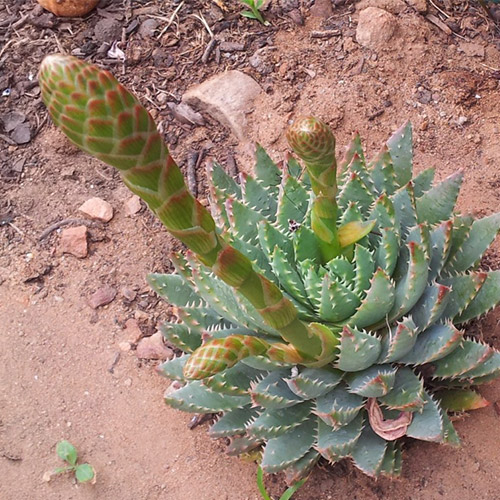
A mature plant may produce a tall flower stalk bearing tubular yellow flowers. Flowering is more common when the plant receives strong light, has adequate root space and experiences seasonal temperature changes.

Indoor specimens flower less consistently than mature outdoor plants. Failure to bloom does not necessarily mean the plant is unhealthy.


Tall Aloe vera flower stalk with clusters of tubular yellow flowers
Mature Aloe vera plants can produce tall spikes of tubular yellow flowers.


Common Aloe vera Problems

Root Rot

Root rot is most often associated with excessive moisture, compacted soil or a container without adequate drainage.

Remove the plant from wet soil, cut away damaged roots and allow healthy tissue to dry before repotting it in fresh soil. Severely rotted plants may not recover.

Brown or Tan Patches

Dry, discolored patches often result from sudden exposure to intense sunlight. Existing damage will not turn green again, but gradual acclimation can prevent additional injury.

Thin or Wrinkled Leaves

Wrinkling can indicate dehydration, but damaged roots can produce similar symptoms. Check the soil and root condition before automatically adding more water.

Soft or Translucent Leaves

Soft leaves may indicate overwatering, cold injury or deteriorating roots. Stop watering until the cause has been identified.

Mealybugs

Mealybugs appear as small white, cotton-like clusters between leaves or around the base of the plant. Isolate affected plants and remove small infestations with a cotton swab lightly moistened with 70% isopropyl alcohol.

Scale Insects

Scale insects can resemble immobile brown or tan bumps attached to leaves. Inspect nearby plants because infestations can spread through an indoor collection.


Traditional Topical Uses and Safety

The clear gel inside Aloe vera leaves is widely included in commercial skincare products and has a long history of traditional topical use. The clear inner gel should not be confused with the yellow latex located immediately beneath the outer leaf skin.

Plant material can cause irritation or digestive problems in some people. Do not use a houseplant as a substitute for appropriate medical treatment, particularly for serious burns, wounds, allergic reactions or persistent skin conditions.

For additional historical examples, visit our overview of succulents associated with traditional medicinal uses.

Safety note: Never ingest Aloe latex or homemade Aloe preparations without guidance from a qualified healthcare professional.


Is Aloe vera Toxic to Pets?

Keep Aloe vera away from cats and dogs. Ingestion can cause digestive symptoms such as vomiting and diarrhea. Contact a veterinarian or animal poison-control service when a pet may have eaten the plant.


Growing Aloe vera Outdoors

In frost-free areas, Aloe vera can be grown in containers, raised beds, rock gardens and water-wise landscapes. Good drainage remains essential, particularly during cool or rainy weather.

Container growing is usually safest in colder climates because the plant can be moved indoors before freezing weather arrives.


Related Aloe Species


Frequently Asked Questions

How often should Aloe vera be watered?

Water after the soil has dried completely throughout the root zone. Indoor plants commonly require water every two to four weeks, but conditions should determine the schedule.

Can Aloe vera grow indoors?

Yes. Place it near a bright window, use fast-draining soil and avoid leaving water in the saucer beneath its pot.

Does Aloe vera need direct sunlight?

It needs strong light and can tolerate direct sun after gradual acclimation. Afternoon shade may be beneficial in exceptionally hot climates.

Why is my Aloe vera turning brown?

Possible causes include sunburn, dehydration, salt accumulation, cold damage and unhealthy roots. Examine the location, soil moisture and root condition before changing its care routine.

Why are my Aloe vera leaves soft?

Soft tissue commonly indicates excessive moisture, cold injury or root damage. Remove the plant from its container if the soil remains wet or the base is becoming dark.

Can Aloe vera be propagated from a leaf?

Leaf propagation is unreliable because detached leaves often rot. Separating rooted offsets is the recommended method.

Why is my Aloe vera growing sideways?

The plant may be leaning toward its strongest light source. Rotate the container and provide brighter, more evenly distributed light.

Why has my Aloe vera not produced pups?

Young plants may need more time. Mature plants are more likely to form offsets when provided with adequate light, healthy roots and an appropriate watering routine.

Is Aloe vera safe for cats and dogs?

No. Keep it outside the reach of pets because ingestion may cause digestive illness.


Aloe vera Care Summary

  • Provide strong, consistent light.
  • Use loose, fast-draining soil.
  • Choose a container with drainage holes.
  • Allow the soil to dry completely between waterings.
  • Protect the plant from freezing temperatures.
  • Propagate it by separating rooted offsets.
  • Inspect regularly for root rot, mealybugs and scale.
  • Keep it away from cats and dogs.


Explore More Succulents

Compare Aloe vera with hundreds of unusual, colorful and drought-tolerant plants in our succulent plant database.