4 Best Grow Lights for Succulents Indoors
As an Amazon Associate, Xerophyte Garden earns from qualifying purchases. This does not affect the price you pay.
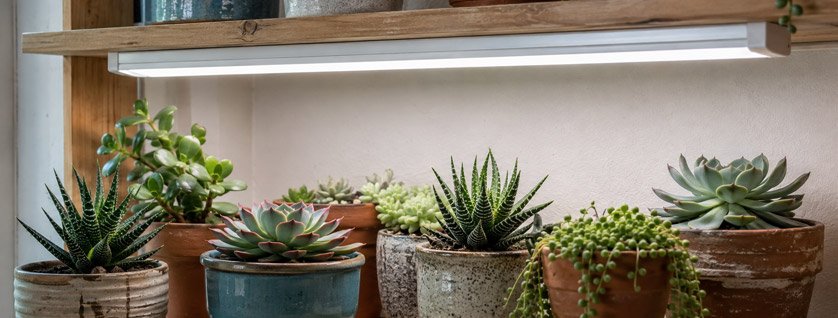
Succulents need considerably more light than most common houseplants. When they do not receive enough, they may stretch toward a window, lose their compact shape or develop pale growth.
A good grow light can supplement weak window light and make it easier to grow healthy succulents indoors. The best option depends on whether you have one plant, a shelf full of plants or an entire indoor collection.
Our top overall recommendation is the Barrina T5 grow light because its slim design works particularly well over shelves containing several small succulents.
Best Grow Lights for Succulents at a Glance
- Best overall: Barrina T5 grow lights
- Best for one plant: SANSI 10W pot clip grow light
- Best grow-light bulb: GE BR30 LED grow light bulb
- Best for a large collection: Spider Farmer SF1000
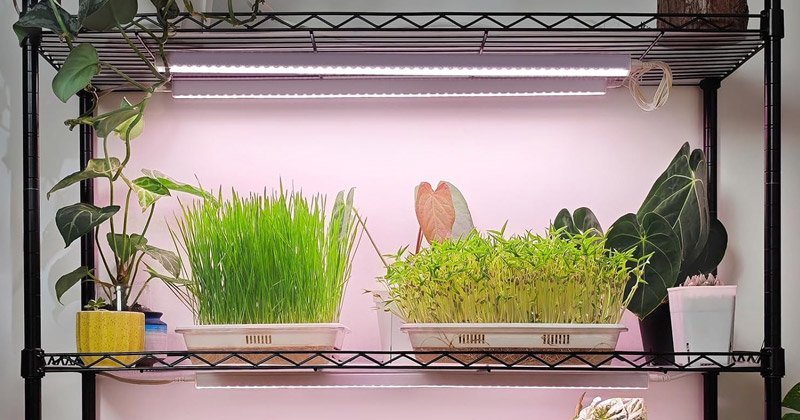
Barrina T5 grow lights provide coverage across an indoor plant shelf.
1. Barrina T5 Grow Lights: Best Overall
Barrina T5 grow lights are a practical choice for a shelf, plant rack or cabinet containing multiple succulents. The two-foot light bars can be mounted underneath a shelf, placing the light directly above the plants without taking up growing space.
The 5000K version produces a relatively natural-looking white light instead of the strong purple color associated with some older grow lights. Individual bars can also be linked together, making it easier to expand the setup as your collection grows.
Why We Recommend It
- Well suited to plant shelves and cabinets
- Illuminates several small plants at once
- Slim design does not occupy shelf space
- Linkable for larger collections
- White light is easier to live with than purple light
Possible Drawbacks
- Requires mounting above the plants
- Not the best configuration for one isolated pot
- May require more than one strip for broad or densely packed shelves
See the Barrina T5 grow light on Amazon →
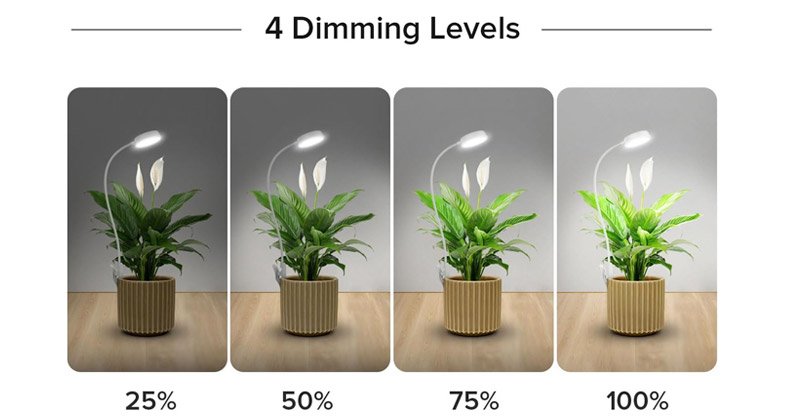
The SANSI pot clip grow light offers four adjustable brightness levels.
2. SANSI 10W Pot Clip Grow Light: Best for One Plant
The SANSI 10W pot clip light is the simplest option for one succulent that needs additional light. It clips directly to a planter and positions a compact light above the plant.
This arrangement is useful when you do not want to install a shelf light or dedicate an entire lamp to one small pot. The built-in timer also makes it easier to maintain a regular daily schedule.
Why We Recommend It
- Clips directly onto many plant pots
- Compact enough for desks and small spaces
- Directs light toward one plant
- Includes automatic timer controls
- No permanent installation required
Possible Drawbacks
- Designed to cover only a small area
- The clip may not fit every planter
- Not powerful enough for an entire shelf of succulents
Get the SANSI 10W pot clip light on Amazon →
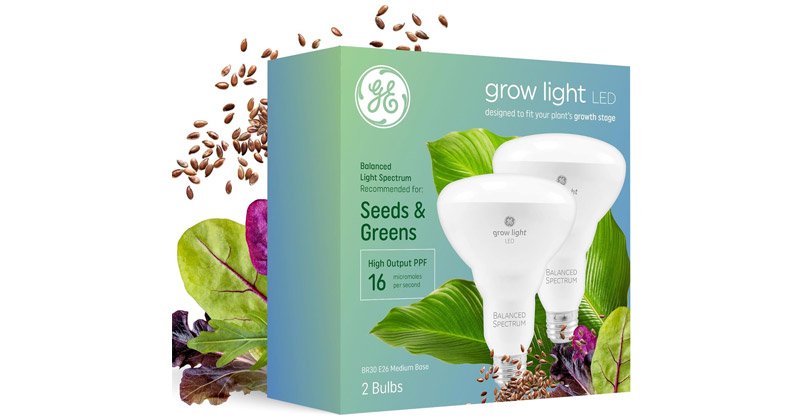
GE BR30 balanced-spectrum grow light bulbs designed for seeds and leafy plants.
3. GE BR30 LED Grow Light Bulb: Best Standard Bulb
The GE BR30 LED grow light is a good choice if you already have a suitable lamp or hanging fixture. It uses a standard medium-base socket, allowing you to convert an ordinary fixture into a plant light without purchasing a complete lighting system.
This option is especially useful when appearance matters. A regular lamp can blend into a living room, office or bedroom more naturally than a suspended grow-light panel.
Why We Recommend It
- Fits many ordinary medium-base light fixtures
- Easy way to reuse an existing lamp
- Looks less industrial in a living space
- Simple bulb replacement
- Useful for a small group of plants
Possible Drawbacks
- Lamp or fixture is not included
- Coverage depends heavily on the fixture and its position
- Must be positioned close enough to benefit the plants
See the GE BR30 grow light bulb on Amazon →
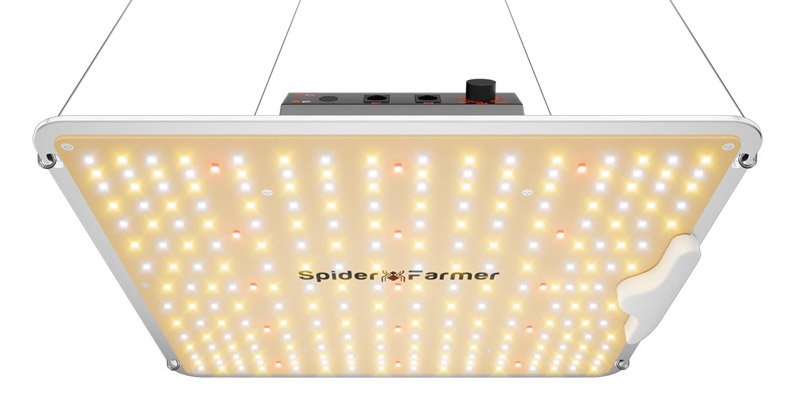
Spider Farmer SF1000 dimmable LED grow light for larger indoor plant collections.
4. Spider Farmer SF1000: Best for a Large Collection
The Spider Farmer SF1000 is the most powerful option on this list. It is a 100-watt, full-spectrum LED panel intended to cover a larger growing area than a bulb, clip light or individual shelf strip.
Its output can be dimmed, allowing the intensity to be adjusted for the size of the collection and distance above the plants. The manufacturer lists a core coverage area of approximately two feet by two feet.
This light makes the most sense for a dedicated indoor succulent station, grow tent or concentrated collection. It is probably excessive for one plant sitting on a windowsill.
Why We Recommend It
- Suitable for a larger group of succulents
- Dimmable output
- Full-spectrum LED light
- Broad, even coverage compared with a single bulb
- Fanless design avoids additional fan noise
Possible Drawbacks
- Costs more than smaller lights
- Requires overhead hanging space
- May be excessive for a small collection
- Produces stronger light that must be positioned carefully
Check out the Spider Farmer SF1000 on Amazon →
How to Choose a Grow Light for Succulents
Match the Light to Your Growing Area
Start by measuring the area occupied by your plants. A clip light may be sufficient for one pot, while a shelf generally benefits from long light bars. A larger LED panel is better suited to a concentrated collection. Lighting needs can vary by plant. See our different types of succulents to learn more about the plants in your collection.
Choose White or Full-Spectrum Light
White and full-spectrum grow lights support plant growth while producing a more natural appearance inside the home. They are generally more pleasant in living areas than purple grow lights.
Look Beyond Brightness
A grow light can look extremely bright to a person without delivering enough usable light to a plant. Product wattage, coverage area and recommended hanging distance are more useful than relying on visual brightness alone.
Consider a Timer
Succulents benefit from a consistent routine. A built-in timer or separate outlet timer can turn the grow light on and off automatically, eliminating the need to remember it every day.
How Long Should Grow Lights Stay On?
A reasonable starting point for many indoor succulents is approximately 12 to 14 hours of artificial light per day, followed by a period of darkness.
The correct duration depends on the strength of the light, its distance from the plants and how much natural sunlight they already receive. A weak light positioned far away will not necessarily become effective simply because it stays on longer.
Use a timer for consistency and watch how the plants respond.
How Close Should a Grow Light Be?
Follow the light manufacturer’s recommended hanging distance whenever one is provided. Small LED bulbs and clip lights generally need to be closer to the plant than a powerful LED panel.
Do not immediately place a strong new light extremely close to a succulent. Introduce brighter light gradually and watch for bleaching, unusual discoloration or dry-looking patches.
Signs Your Succulents Need More Light
- Stems become unusually long
- Leaves spread farther apart
- The plant leans toward a window
- New growth becomes pale or weak
- A compact rosette begins opening or flattening
- Colorful varieties lose some of their color
Stretching caused by insufficient light is known as etiolation. Existing stretched growth will not shrink back into its original shape, but better lighting can help future growth remain more compact.
Signs the Light May Be Too Strong
- Bleached or faded patches appear
- Leaves develop dry brown areas
- Damage appears primarily on the side closest to the light
- The plant declines shortly after a sudden increase in light intensity
Move the light farther away, reduce its intensity or shorten the schedule if signs of light stress appear.
Our Final Recommendation
For a typical shelf containing several small succulents, the Barrina T5 grow lights offer the best combination of coverage, simple installation and expandability.
Choose the SANSI pot clip light for one plant, the GE BR30 bulb when you want to use an existing lamp, or the Spider Farmer SF1000 for a larger dedicated collection.
The most important factor is not buying the biggest light available. Choose a light that matches the number of plants, available space and way the plants are displayed.