
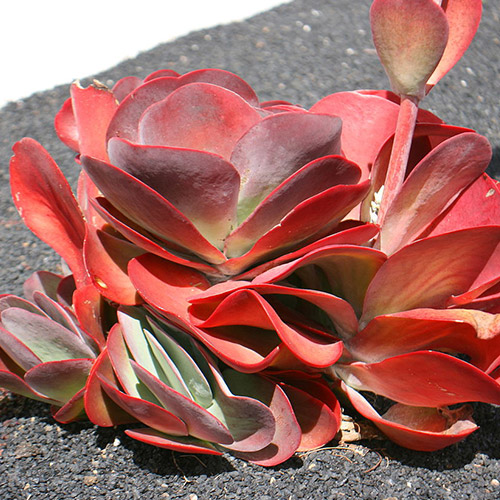
Photo: Frank Vincentz, Wikipedia
Flapjack
Kalanchoe luciae
An evergreen succulent with broad paddle-shaped leaves that develop vivid red margins in strong light.
Plant profile updated February 15, 2025
Quick Facts
LightFull sun to partial shade
WaterTypical succulent needs
Maximum Height24 inches / 61 cm
Maximum Width36 inches / 91 cm
HardinessUSDA Zone 9a
Minimum Temperature20°F / -6.7°C
PropagationLeaves, cuttings and offsets
ToxicityToxic to animals
DormancySummer dormant
Flower ColorYellow
Identification
LeavesLarge smooth flat leaves resemble paddles.
Stress ColorLeaf edges turn vivid red in strong sunlight.
GrowthOffsets form around the base of mature rosettes.
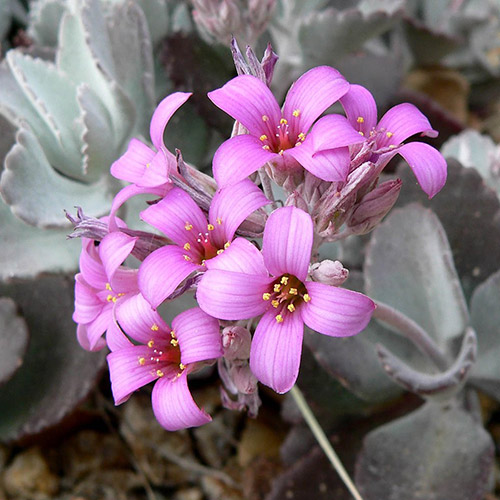
FlowersTall yellow flower spikes appear from late winter into spring.
How to Grow Flapjack
Light
Provide at least six hours of full to partial sun.
Water
Use the soak and dry method.
Soil
Use a gritty well-draining succulent mix.
Temperature
Protect from temperatures below 20°F (-6.7°C).
Color
Increase direct light gradually for stronger red margins.
After Flowering
The flowering rosette dies but offsets continue growing.
Propagation
Offsets
- Separate a healthy offset.
- Let it dry for one to two days.
- Plant in well-draining soil.
Leaves and Cuttings
- Remove healthy material.
- Let it callous.
- Place in dry succulent soil.
Scientific Classification
| Kingdom | Plantae |
|---|---|
| Order | Saxifragales |
| Family | Crassulaceae |
| Genus | Kalanchoe |
| Species | Kalanchoe luciae |
Note: Flapjack is often confused with Kalanchoe thyrsiflora, which generally remains greener.
Sources and Image Attribution
Plant details are compiled from the existing Xerophyte.Garden profile.
Primary image: Frank Vincentz, Wikipedia.

