Photo: Forest & Kim Starr, Wikipedia
Kalanchoe
Copper Spoons
Kalanchoe orgyalis
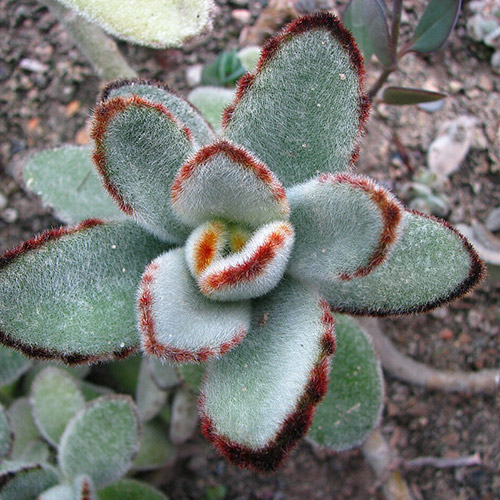
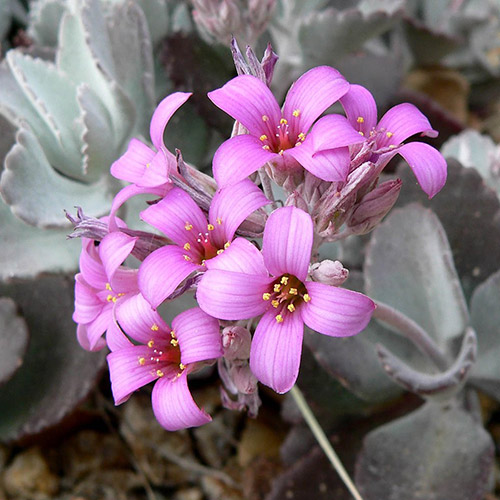
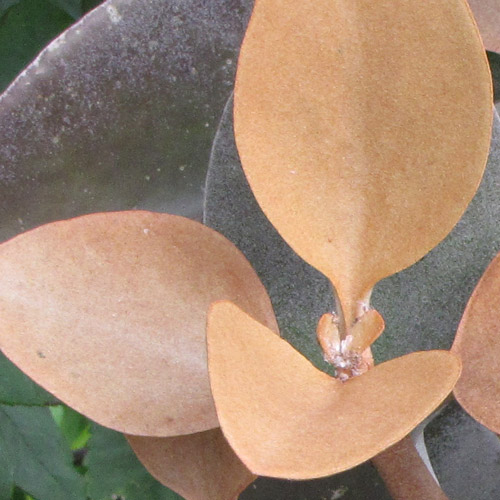
A branching succulent shrub with velvety spoon-shaped leaves that mature from bronze to gray-green.
Plant profile updated August 25, 2026
QUICK FACTS
Key growing and identification information for Kalanchoe orgyalis.
IDENTIFICATION
Look for these characteristics when identifying Kalanchoe orgyalis.
HOW TO GROW COPPER SPOONS
Use these growing guidelines as a practical starting point and adjust for local conditions.
Light
Provide bright light with several hours of gentle direct sun to maintain warm bronze foliage.
Water
Water thoroughly after the soil dries and reduce watering during summer dormancy.
Soil
Use a gritty fast-draining succulent mix in a container with an open drainage hole.
Temperature and Maintenance
Protect from frost, provide good airflow and prune long stems to encourage branching.
PROPAGATION BY STEM CUTTINGS
Copper Spoons is most reliably propagated from healthy stem sections.
- Cut a healthy stem with a sterile blade.
- Remove the lowest leaves and allow the cut end to callus.
- Insert the cutting into dry, fast-draining soil.
- Wait several days before watering lightly.
- Keep the cutting warm and in bright filtered light while roots establish.
SCIENTIFIC CLASSIFICATION
The botanical classification currently used for this plant profile.
| Kingdom | Plantae |
|---|---|
| Clade | Tracheophytes |
| Clade | Angiosperms |
| Order | Saxifragales |
| Family | Crassulaceae |
| Genus | Kalanchoe |
| Species | Kalanchoe orgyalis |
Toxicity: Kalanchoe orgyalis can be toxic if ingested. Keep it away from children and animals and contact an appropriate medical or veterinary professional if ingestion causes symptoms.