
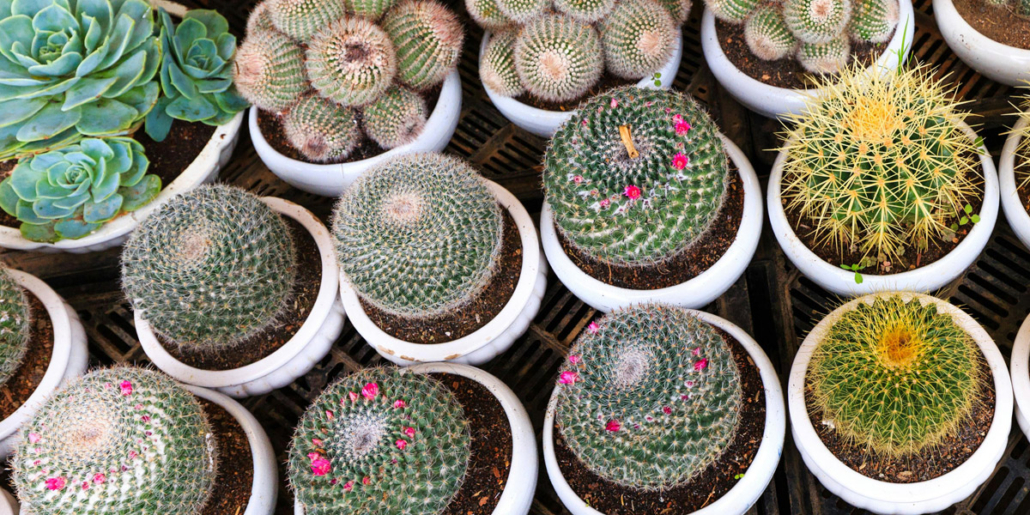
Mini Succulent Varieties
Mini succulents bring unusual shapes, colors, and textures to windowsills, desks, and other small spaces. However, the word mini can be misleading. Some plants remain naturally compact, while others are simply young succulents that will eventually outgrow their tiny pots.
The best mini succulent varieties have naturally small growth habits, grow slowly, or tolerate occasional division and repotting. The varieties below include rosette-forming, trailing, clustered, and stone-like plants for several different growing conditions.
What Is a Mini Succulent?
We all know that a small pot does not permanently keep a succulent ‘miniature’. A mini succulent is a gardening description rather than a formal botanical category. It may refer to:
- a naturally small succulent species.
- a compact cultivar selected for reduced growth.
- a young plant that has not reached its mature size.
- a succulent temporarily maintained in a small nursery pot.
Keep in mind, restricting the roots too severely can instead cause poor growth, dehydration, or declining plant health. So be sure to check the plant’s scientific name and expected mature dimensions before deciding where it will live for the rest of it’s fun little life.
See our list of our favorite mini succulents!
Nature’s cutest little plants 🪴
1. Miniature Aloe
Aloe descoingsii is among the smallest aloes. It forms tiny rosettes of triangular green leaves marked with pale bumps. It may produce offsets that gradually create a cluster.
Miniature aloes generally need bright light, excellent drainage, and careful watering. Let the potting mix dry appropriately before watering again. Avoid choosing an aloe based only on its size at the garden center because a young large-growing species will not remain miniature.
2. Compact Echeveria
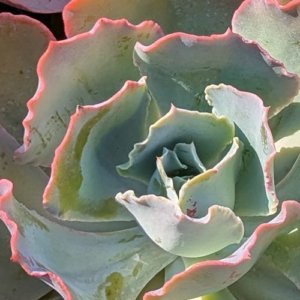
📷 Echeveria ‘Sahara’ succulent plant, image by JL Faverio
Echeverias are popular for their symmetrical rosettes and colors ranging from green and blue-gray to pink, red, and purple. Many remain reasonably compact, although mature size varies by species and cultivar.
Echeveria minima is a particularly compact choice that produces small blue-green rosettes. It can develop offsets and eventually form an attractive cluster. Cultivars such as Echeveria ‘Sahara’ may be sold as small plants but need enough room for future growth.
Remember, Echeverias do require strong light to maintain a compact shape. In insufficient light, the stem stretches and spaces develop between the leaves. This condition is called etiolation.
3. Adromischus
Adromischus species are small South African succulents known for thick leaves with unusual shapes, markings, and textures. Many grow slowly and fit well in individual display pots.
Adromischus cooperi, commonly called plover eggs, produces chunky leaves that may develop purple or reddish markings in strong light. Other species have wedge-shaped, rounded, or crinkled leaves. Adromischus plants need porous soil and careful watering. Their fleshy leaves can hold moisture for extended periods, so continuously damp soil creates a greater risk than occasional dryness.
4. Dwarf Gasteria
Gasterias have thick, tongue-shaped leaves that frequently carry pale spots or textured bands. Young plants often arrange their leaves in two opposing rows, while older plants may develop a rosette.
Gasteria bicolor var. liliputana is a naturally small selection suitable for compact collections. Gasterias generally tolerate indoor conditions and slightly less intense light than many Echeverias. Provide bright filtered light, drainage, and airflow. Although Gasteria may tolerate lower light, deep shade can still produce weak or elongated growth.
5. Lithops
Lithops are often called living stones because each plant consists of a pair of thick leaves that resembles a pebble. Their compact form makes them genuinely miniature, but their specialized growth cycle requires more attention than the phrase “low maintenance” suggests.
A new pair of leaves develops by drawing stored moisture from the old pair. Watering during this replacement process can increase the risk of splitting or rot. The timing varies with the plant and growing conditions, so Lithops should not be watered on the same schedule as a mixed succulent collection. Give Lithops abundant light, mineral-rich fast-draining soil, and a pot deep enough for their roots. Their small size does not mean that they need a shallow decorative container.
6. Haworthia and Haworthiopsis
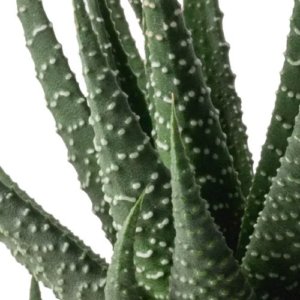
📷 Haworthia ‘Zebra’ succulent plant, image by livetrends.com
Haworthias and Haworthiopsis are among the most practical small succulents for indoor growers. They are compact, slow-growing, and generally more tolerant of filtered indoor light than sun-hungry desert cacti.
The familiar zebra plant is usually Haworthiopsis attenuata or a related species. It has pointed leaves with raised white markings. Window haworthias have translucent areas near the leaf tips that allow light to enter the plant tissue.
These plants still need sufficient light and drainage. A dim room can weaken their growth, while intense afternoon sun through glass may scorch plants that have not been acclimated gradually.
7. Thimble Cactus
Thimble cactus, commonly sold as Mammillaria gracilis, forms clusters of small rounded or cylindrical stems. Each stem is covered in white radial spines, giving the cluster a delicate woven appearance.
The offsets detach easily and can root under suitable conditions. This makes the plant easy to propagate, but loose offsets should be handled carefully with tools rather than bare fingers. Thimble cactus needs strong light, fast-draining soil, and restrained watering. It may remain compact, but a healthy cluster will gradually spread beyond its original pot.
8. Cobweb Houseleek
Sempervivum arachnoideum, the cobweb houseleek, produces small rosettes covered with fine white threads. These threads make the plant appear to have a spiderweb stretched across its leaves. Sempervivums are usually better suited to outdoor growing than permanently warm indoor rooms. They appreciate strong sunlight, airflow, and seasonal temperature changes. Many are considerably more cold-hardy than tropical succulents.
The mother rosette dies after flowering, but the surrounding offsets continue growing. This is a normal part of the plant’s life cycle rather than evidence that the entire cluster is dying.
9. Small Sedums
Sedum includes upright plants, trailing varieties, and low-growing ground covers. Small-leaved species such as Sedum dasyphyllum can create a miniature landscape effect in a shallow outdoor container.
Many sedums spread horizontally even when they remain short. Their height may be miniature, but their total width will increase as stems root or extend over the edge of the pot. Light and cold tolerance vary across the genus. Identify the species before treating every Sedum as an indoor plant or assuming it can survive freezing temperatures.
10. Kalanchoe pumila
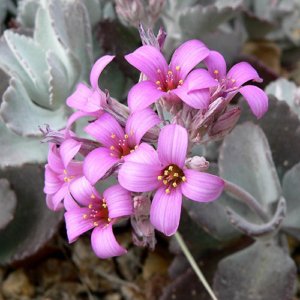
📷 Kalanchoe pumila aka Flower Dust
Kalanchoe pumila, commonly called flower dust plant, has silvery leaves and pink or purple flowers. Its arching growth can work well near the edge of a container or in a small hanging pot.
This species stays more compact than many shrub-like Kalanchoes, but it still needs space for spreading stems. Bright light supports denser growth and flowering.
Allow the potting mix to dry appropriately between waterings. Keep Kalanchoe plants away from pets and children because members of the genus can be harmful if eaten.
11. Watch Chain Crassula
Crassula muscosa, commonly called watch chain, produces narrow branching stems covered with tightly overlapping leaves. The growth resembles miniature chains, scales, or the branches of a tiny evergreen tree.
Watch chain may begin as a compact upright plant, but its stems can lengthen and lean over the edge of a pot. Pruning can maintain a denser shape, and healthy cuttings can be propagated after the cut ends have dried. Give the plant bright light and allow the soil to dry appropriately between waterings. Insufficient light produces thin, weak stems.
12. String of Pearls
String of pearls, now classified as Curio rowleyanus, is a trailing succulent with round leaves that store water. A young plant fits easily into a small pot, but the stems can become long when conditions are favorable. This is a good choice when the available space is vertical rather than horizontal. Place it where its stems can trail without being crushed or repeatedly disturbed.
String of pearls needs bright light and a porous potting mix. Its roots are relatively fine, so an oversized wet container can create problems. The plant is also harmful if eaten and should be kept away from pets and young children.
13. Compact Aeoniums
Aeoniums form rosettes at the ends of stems. Many eventually become branching shrubs, so buyers should not assume that every small nursery Aeonium will stay miniature.
Compact species and cultivars can work in small collections when their mature dimensions are understood. Unlike many common succulents, Aeoniums often grow actively during cooler months and slow down or become dormant during hot summer weather. This seasonal pattern affects watering. An actively growing plant may use moisture differently from a dormant plant, so check the soil and the plant instead of following one year-round schedule.
Choosing the Right Mini Succulent
Choose a plant based on its mature size and growing requirements rather than the diameter of its nursery pot. Haworthias and Gasterias suit bright indoor spaces, many Sempervivums perform better outdoors, and Lithops need a specialized watering routine. The best miniature collection groups plants with compatible needs while leaving enough space for healthy roots and future growth. For additional definitions encountered while shopping for plants, visit our glossary of succulent terms.
4 Simple Tips to Care for Mini Succulents
- Provide Enough Light – Most compact succulents need strong light to retain their shape. A plant leaning toward a window or developing widely spaced leaves probably needs a brighter position. Increase direct sunlight gradually. Moving a plant suddenly from a shaded store shelf into intense afternoon sun can cause permanent scorch marks.
- Use a Pot With Drainage – A drainage hole allows excess water to leave the root zone. Tiny decorative containers without drainage may look attractive, but they make moisture much harder to manage. The pot should accommodate the roots rather than merely matching the diameter of the leaves. Follow our guide to planting a succulent for more information about containers and soil.
- Do Not Water by Pot Size Alone – Small containers can dry quickly, but that does not mean they should be watered every day. Check the potting mix and consider the species, temperature, light, airflow, and season. When watering is needed, moisten the root zone thoroughly and let excess water drain. Repeatedly adding tiny sips can leave part of the root system dry while salts accumulate in the soil.
- Plan for Growth – Offsets, new branches, and expanding roots are signs of a healthy plant. Repot when roots have filled the container, drainage has deteriorated, or the plant has become unstable. A mini succulent does not fail when it outgrows its first pot. Growth simply means that the plant needs a slightly larger home or can be divided and propagated.
Frequently Asked Questions
Do mini succulents stay small forever?
Some naturally compact species remain small, but many “mini succulents” are young plants. Research the scientific name to determine the plant’s mature size.
How often should a mini succulent be watered?
There is no universal schedule. Water according to the species, soil dryness, light, temperature, airflow, and season. Small pots may dry faster, but overwatering remains a serious risk.
Can mini succulents survive in an office?
They can grow in an office that provides sufficient natural light or an appropriate grow light. Ordinary ceiling lights are usually inadequate for maintaining compact succulent growth.
What is the easiest mini succulent for beginners?
Haworthia, Haworthiopsis, Gasteria, and some small aloes are forgiving starting points when provided with drainage and sufficient light. Lithops are compact but require more specialized watering.
Why is my mini succulent getting taller?
Some species naturally develop stems, but rapid weak or leaning growth usually indicates insufficient light. Move the plant to a brighter location gradually. Stretched growth will not shrink, although future growth can become more compact.

