
Quick Facts
LightFull sun to partial shade
WaterSlightly below typical needs
Maximum Height12 inches / 30 cm
Maximum Width24 inches / 61 cm
HardinessUSDA Zone 10a
Minimum Temperature30°F / -1.1°C for young plants
PropagationOffsets and seeds
ToxicityToxic to people and animals
DormancySummer dormant
DifficultyAdvanced
Flower ColorPink-orange
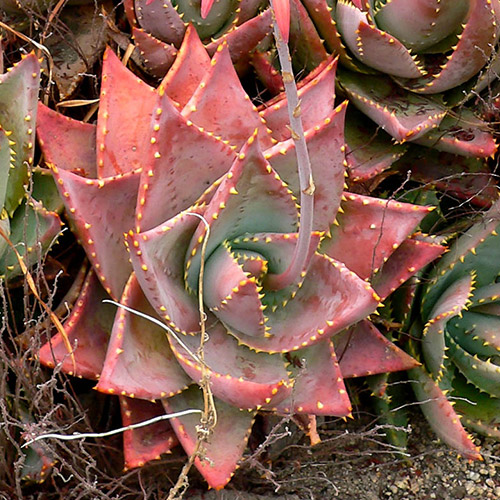
Growth HabitSpiral rosette
Identification
SpiralThe rosette can turn clockwise or counterclockwise.
LeavesFive spiral rows contain sharp, densely packed leaves.
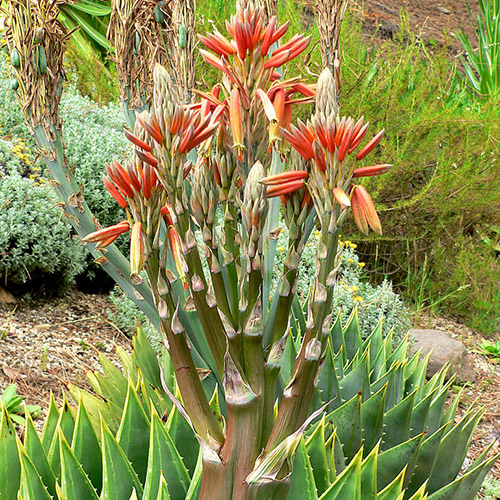
FlowersPink-orange flowers can appear during spring.
NamePolyphylla refers to the plant's many leaves.
How to Grow Spiral Aloe
Light
Provide full sun to partial shade and at least six hours of sunlight daily.
Water
Water slightly less often than a typical succulent and let the soil dry completely.
Soil
Use fast-draining soil with excellent drainage.
Temperature
Protect young plants when temperatures approach 30°F (-1.1°C).
Propagation by Offsets
- Wait until the plant produces a healthy offset.
- Wear gloves because the leaves are sharp.
- Separate the offset using a sterile knife.
- Clean the base and allow it to callous.
- Plant it in well-draining soil.
Do not attempt propagation from individual leaves because they are likely to rot.
Scientific Classification
| Kingdom | Plantae |
|---|---|
| Order | Asparagales |
| Family | Asphodelaceae |
| Subfamily | Asphodeloideae |
| Genus | Aloe |
| Species | Aloe polyphylla |
Conservation and safety: Spiral Aloe is considered endangered in the wild. Obtain plants from responsible cultivated sources. Wear gloves when handling its sharp leaves.
Sources and Image Attribution
Plant details are compiled from the existing Xerophyte.Garden profile.
Primary image by Stan Shebs via Wikipedia.

